
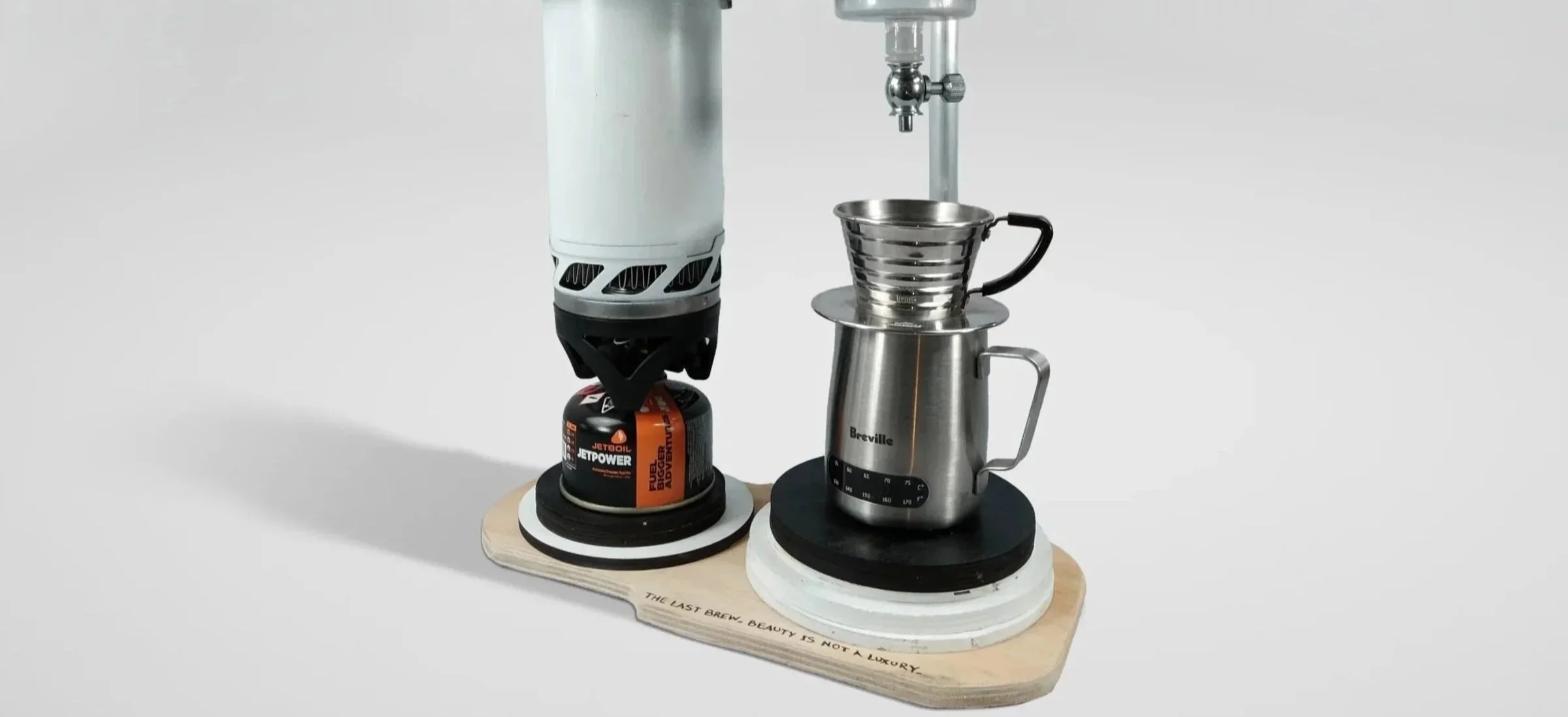
“My Moccamaster still works and the grid's still up. I built this anyway. I'm not getting ready for the end of the world. Rams' principles just kept bugging me, and I wanted to see if they'd hold up with nothing to buy.”
A wooden version of Dieter Rams' KF20 Aeromaster coffee maker, made from salvaged timber and modified camping gear. It actually brews coffee. A laser cut, laminated wooden cylinder holds a steel dripper and glass. The frame is cut by hand to the KF20's proportions, and a modified Jetboil Zip does the heating. The proportions work in wood just like they did in plastic.
It was my first laser cutting job and my first go at laminating. Rams' future never happened. Behind all the clean minimal surfaces we got stuff built to die, sealed so you can't fix it, and a climate falling apart. His dream got turned upside down. But what about the principles themselves?
THE SOLDIER'S SHELL
I had no wood burner and didn't want the laser doing the words, so I pressed a ballpoint pen into the wood over and over for 45 minutes: THE LAST BREW. BEAUTY IS NOT A LUXURY. Halfway through, I remembered something from when I was a kid.
My father's studio in Paraguay. On the shelf was an artillery shell, brass, engraved with a star and some script. A soldier carved it during the war for his madrina de guerra, the woman writing to him at the front. He turned a shell casing into a gift, going over and over it with whatever sharp thing he had.
I was doing exactly the same thing. No wood burner, no laser, just a pen pressed over the same lines until it went deep. I don't think that was luck. The shell taught me without me knowing: you don't need fancy tools to make something beautiful, just patience with whatever you've got.
Then it clicked that I've been doing trench art my whole life without calling it that. The soldier was facing death and I'm not, I choose my limits. But the idea is the same: turn violence and rubbish into something beautiful, do it carefully with not much, and build something that matters a long way from home.
My workshop is next to the railway in Erskineville, in an actual trench along the tracks. I WhatsApp my mum in Paraguay. That shell planted something in me as a kid, and building this, my hands remembered.
“When you can't waste wood, Rams' principles stop being about looks. Good proportions stand up with less material. Joints you can see are joints you can fix. Being honest takes less work than faking it.”
THE PRINCIPLES HOLD
The question kept going round in my head. Rams' ten principles assumed mass production, good design for everyone and a better world through clean, sensible design. That future never came. So do the principles still work when you can't get the materials?
Building it answered that. Proportions that come from what the thing has to do work even better when you can't waste wood on decoration or hide bad joints behind styling. "As little design as possible" stops being a style and just becomes how it has to be built.
It goes in a circle. Rams started with discipline. Then plenty of everything let people waste it on decoration. Now when things get tight, you're back to doing it properly. The principles work at both ends. They only fall apart in the middle, when there's so much stuff nobody has to care.
The soldiers carving shells in the trenches show the same thing. It didn't help them survive. They did it anyway. People keep caring about making things beautiful even when their life is on the line.
Rams thought good design would make a better world. That didn't happen, but his principles still work. You can be far from home and still use them. Beauty still comes through with patient work and not much else.
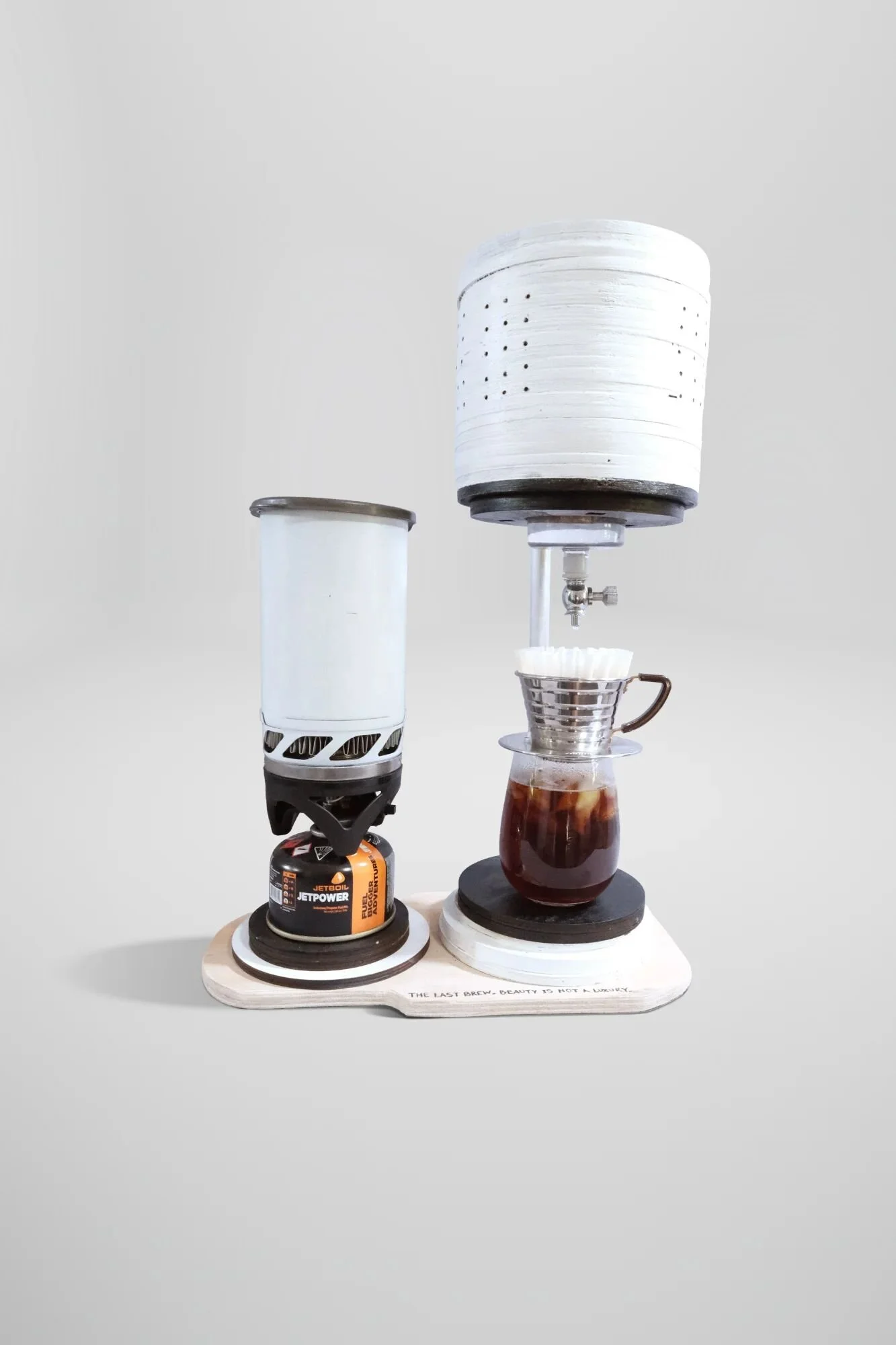
It actually brews coffee. A laminated wooden cylinder, a steel dripper, glass and a modified Jetboil Zip, built to the proportions of Rams' 1972 KF20.
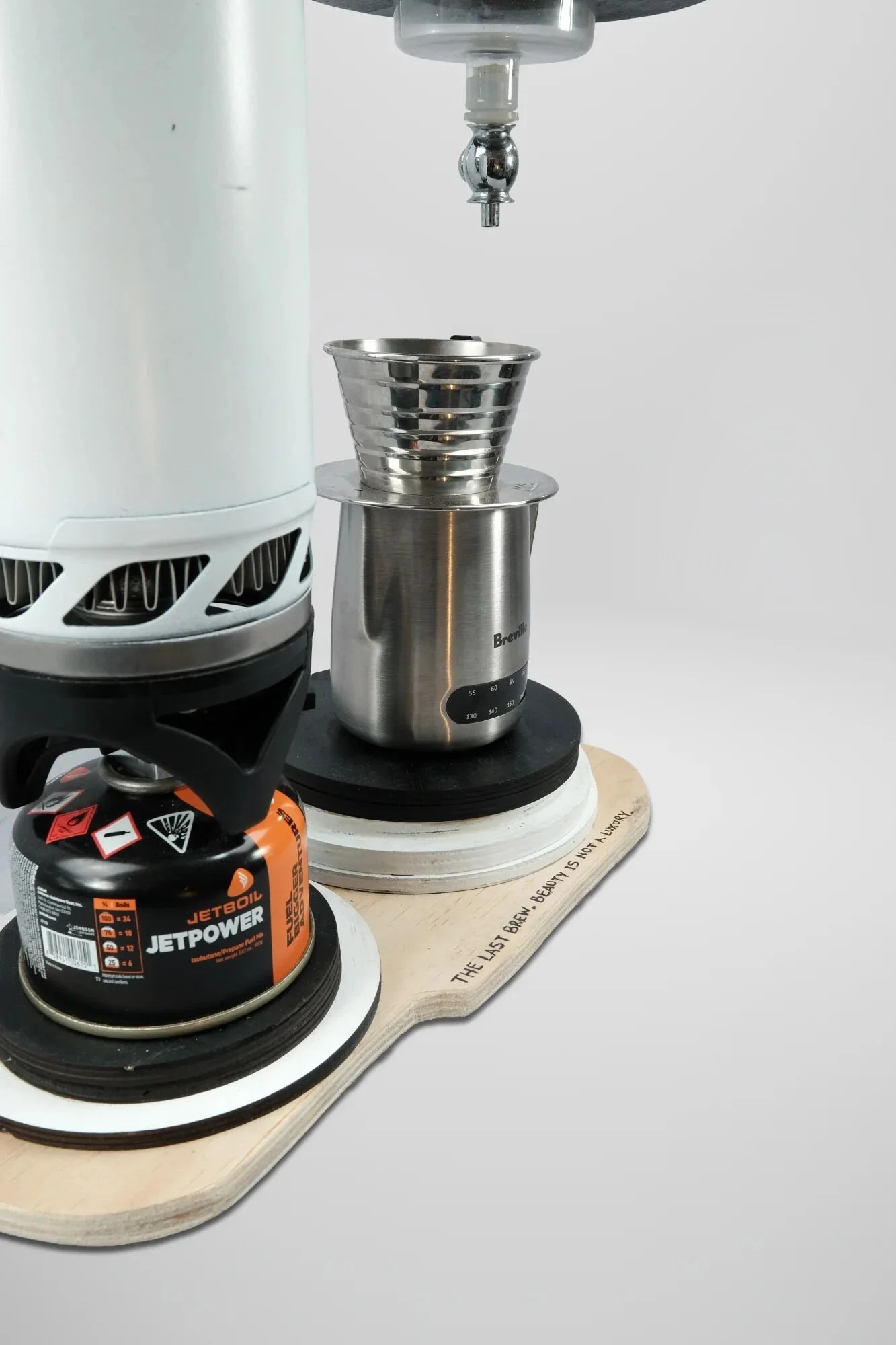
The Jetboil Zip with its sleeve off, painted white. Camping gear doing the heating.
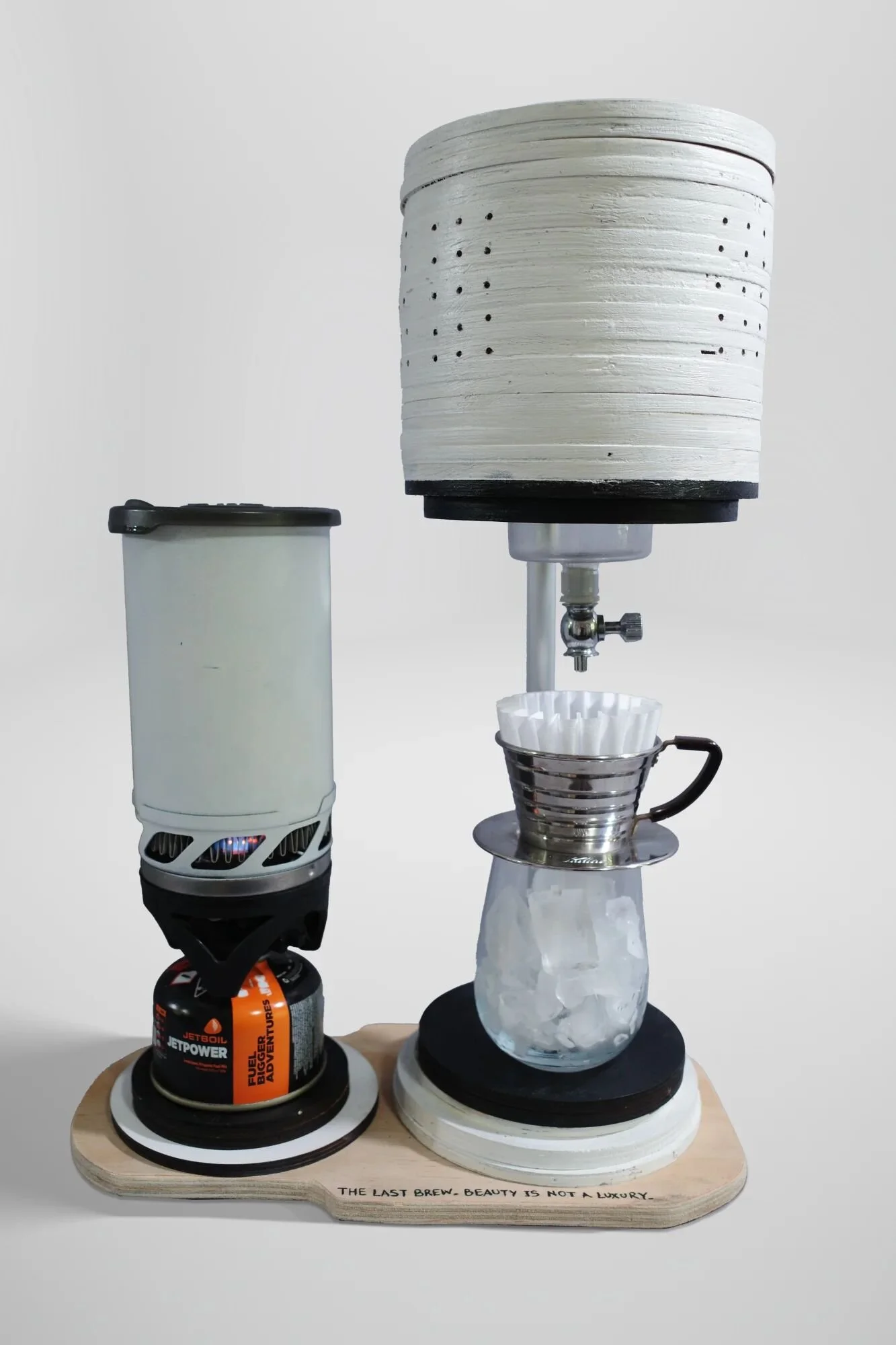
Side on. The proportions work in wood just like they did in plastic.
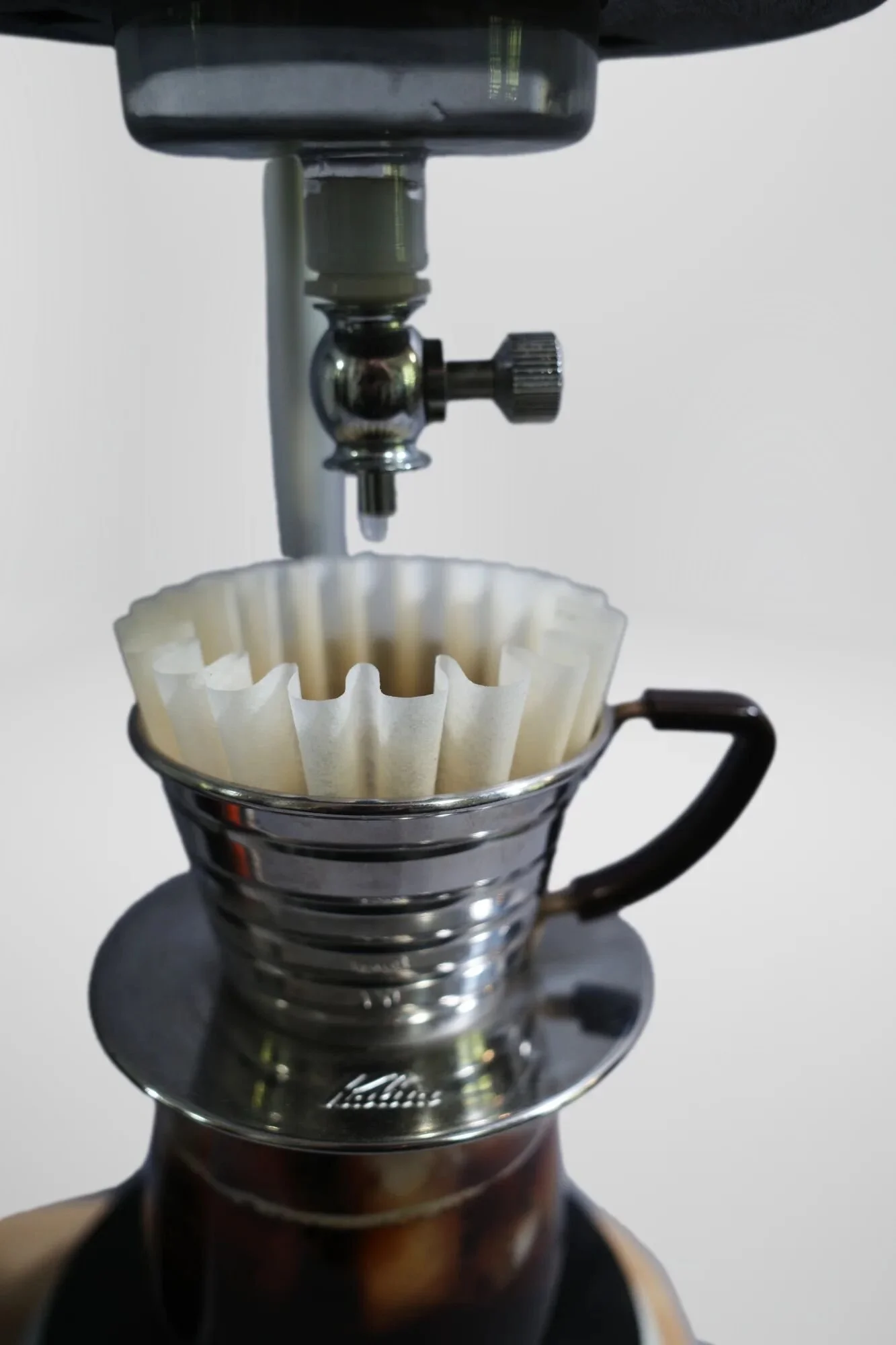
The dripper with a paper filter in, ready to go.
Materials: Salvaged pine, stainless steel dripper, borosilicate glass, modified Jetboil Zip
Size: Built to the proportions of the 1972 KF20 Aeromaster
Body: Salvaged pine rings, laser cut, glued and stacked into a hollow cylinder. The frame is cut by hand, the joints are on show and everything comes apart. The wood holds it up, and the steel and glass deal with the water and the heat.
Heat: A Jetboil Zip with the neoprene sleeve taken off and the bare aluminium painted white by hand. The wood sits above the heat, so it's safe through a full brew.
Proportions: I didn't have a real KF20, so I worked the proportions out from old photos. First laser cutting job, first laminating. A few test pieces didn't fit before it came together.
Engraving: "THE LAST BREW. BEAUTY IS NOT A LUXURY", pressed in with a ballpoint pen over 45 minutes until the lines went deep.
Trench art: The same method as the soldier's shell on my father's shelf in Paraguay.
Status: Works. It brews coffee.
Context in Series
#11 of 12, nearly the end. The club was about choosing every day. This one asks if Rams' principles still work when his whole dream of a better world fell over.
His future never came: stuff built to die, a climate in trouble, things sealed shut. But the principles hold. Good proportions stand up with less material, and doing it honestly takes less work than faking it. When you can't waste wood, they stop being about looks.
I engraved it with a pen, the same way a soldier carved the shell on my father's shelf. Turning rubbish into something beautiful, carefully, with not much, a long way from home. My workshop is in a trench by the railway and I WhatsApp my mum in Paraguay. Different war, same hands.
Last is Lens Provocature: maybe everyone's just performing, and borrowed words are the only ones we've got.