
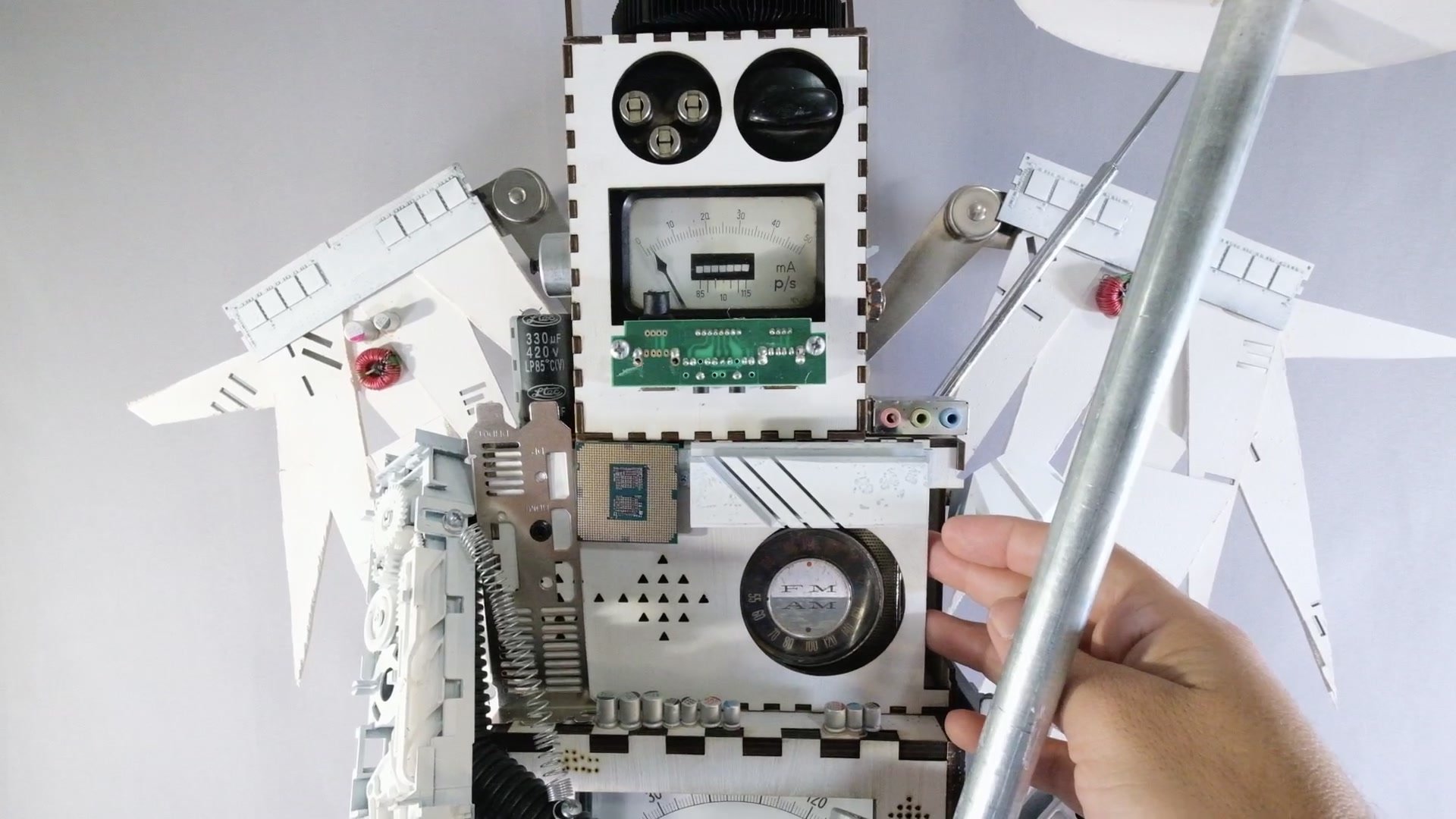
“A self-portrait. Half one thing, half another. It can listen but it can't talk back.”
Built from industrial e-waste. The head is an old multimeter. The body is a gauge my mate George pulled out of the waste and gave me to make something nice out of. It reads km/h, and neither of us knows what it was for. The wings are stainless steel with RAM chips painted white, the memory of flying. The staff is a steel rod with a working LED torch. The heart is a 1970s Zenith AM radio that picks up ABC Melbourne on 774 clearly. There's no transmitter. The heart listens and it can't talk back.
THE MYSTERY GAUGE
I started it after watching Mike Beaudry build robots that don't do anything and heal people just by being there. I thought I'd make a better one that actually works. Three weeks in, tuning the radio and putting the wings on, I saw I was building the opposite of his.
His father jumped off a bridge. I crossed one when I migrated. His robots help by doing nothing, just being there. Mine works, and what it shows is what I couldn't do: it listens and can't answer. We're measuring the same gap from opposite sides.
It sounds too neat, a found gauge nobody can identify ending up in a self-portrait. But it's just what happened. George pulled it out of industrial waste, neither of us ever looked up what it was, and that's why it works. We really don't know.
That's me when I got here. The head is the Western stuff I learnt, the A to B logic, maths at uni. The body is a gauge measuring something nobody understands. I could measure things the Western way, and underneath the Guaraní way of knowing kept going without me noticing.
“I arrived in Australia with aviation, wingsuits and how to build things all in my head, and no English to get it out. I could listen, I couldn't answer. Not fully Paraguayan, not fully Australian. Works anyway.”
BOTH WAYS OF KNOWING
What survives when you migrate, and what changes? Both ways of knowing are still in me, and neither one wins.
The Guaraní way works through people and stories. The stories carry real information and you learn by someone telling you. Arsenio taught me to find my way like that: the Luisón shows up when you're lost, follow the Southern Cross, read the weather in how the animals act.
Moving here added the Western way: numbers, A to B logic, proving things with maths at uni. It didn't replace the old way. It sat on top.
McLuhan wrote about media being the world you live in, and Arsenio taught me the same thing by doing it. The books gave names to what I'd learnt as a kid. Being from two places means I'm never fully sure, and that doesn't go away.
The radio is a working 1970s Zenith, 530 to 1700 kHz, picking up voices out of the air. That's what arriving felt like: English chatter on AM radio and everything I knew stuck inside.
This is me. A creature with wings that remember the wingsuits through real memory chips, carrying a staff that brings light. Standing between the two lets me see things neither side sees alone. It also means I'm often a bit lost, half understanding, always translating.
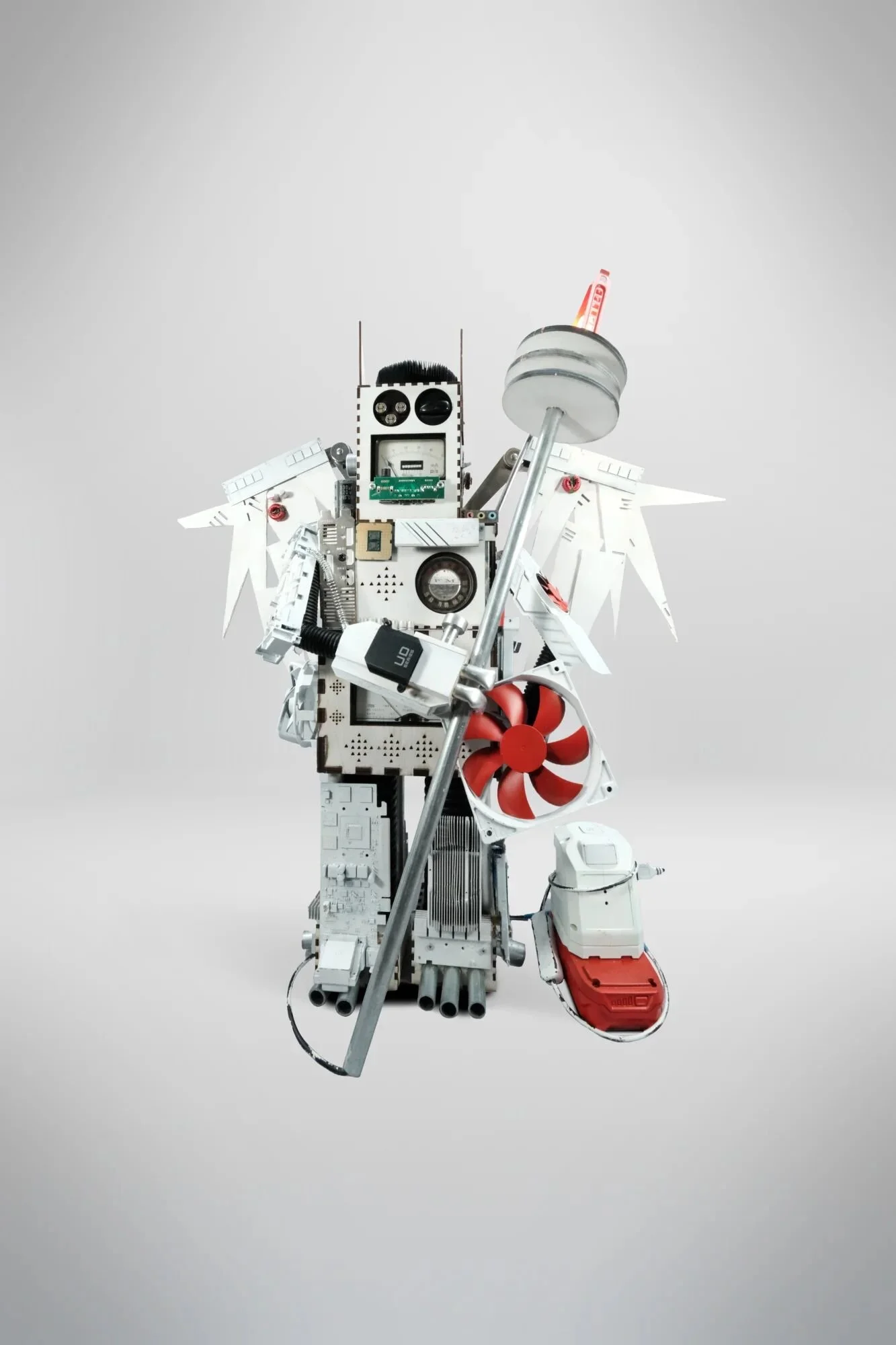
The 1970s Zenith radio heart picks up ABC Melbourne on 774. There's no transmitter. It listens and can't talk back.
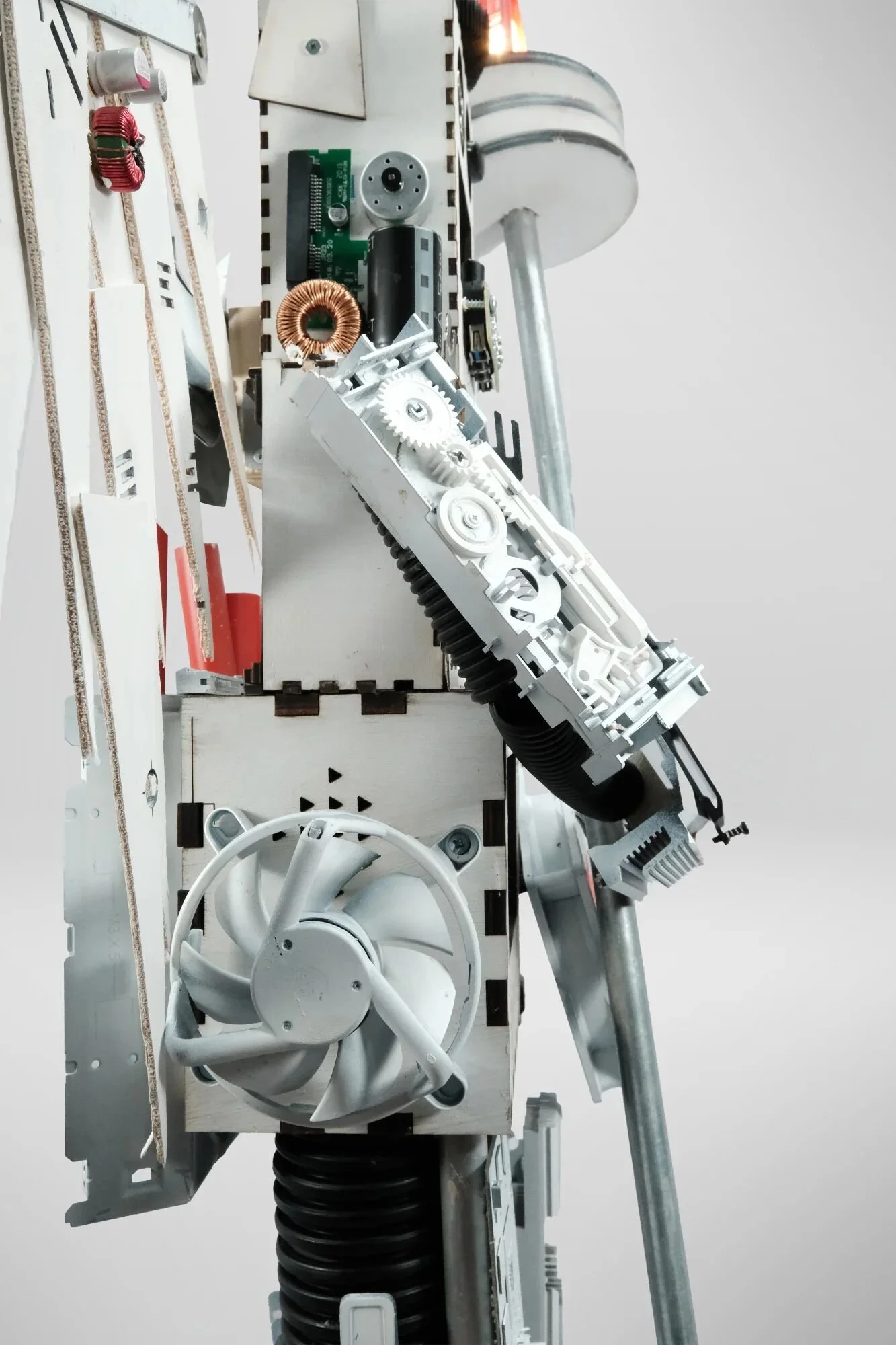
Close up of the body and wings. A gauge from George's industrial waste, still reading km/h for who knows what.
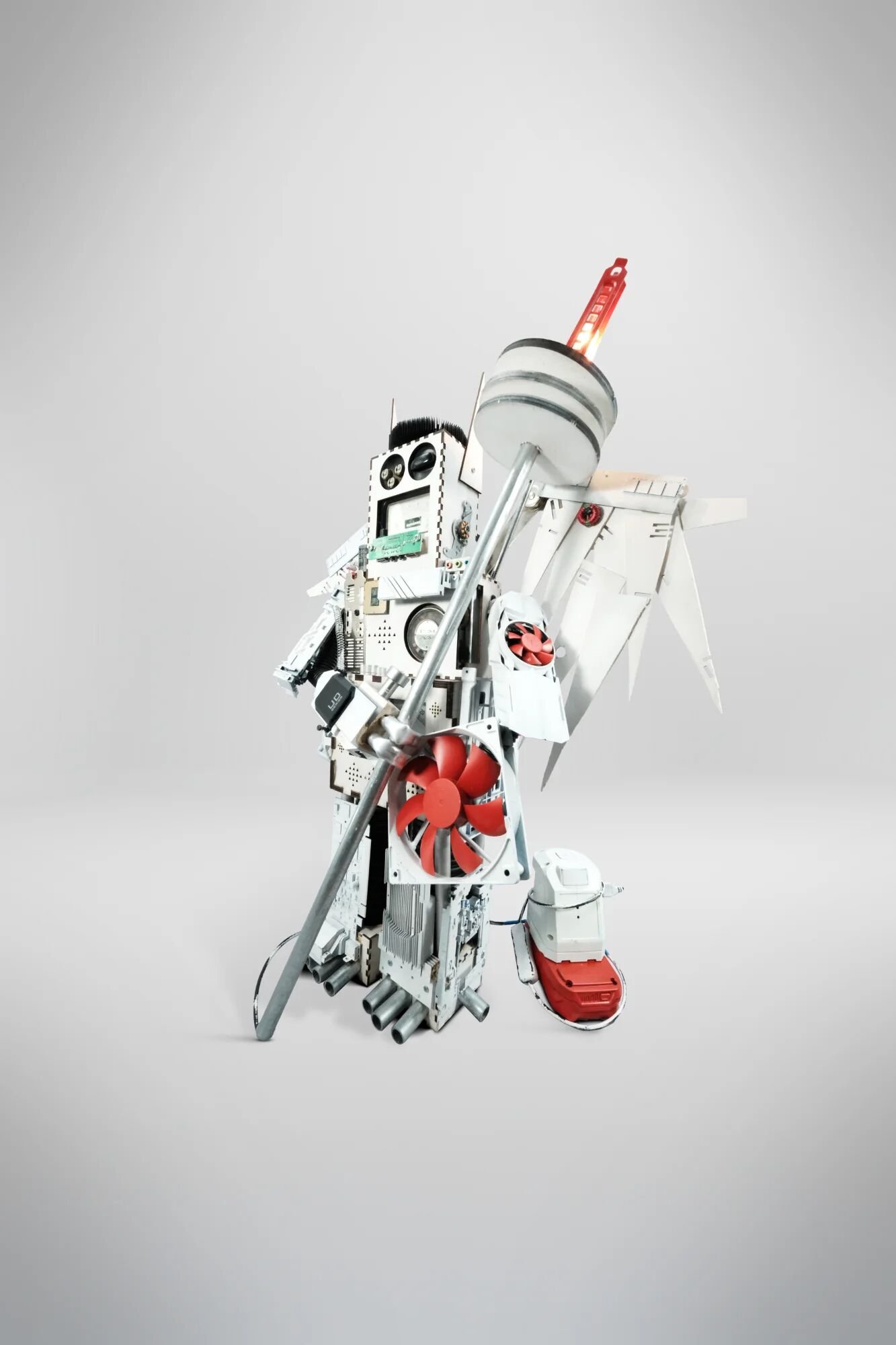
Side on, with the staff. A steel rod with a really bright torch on top.
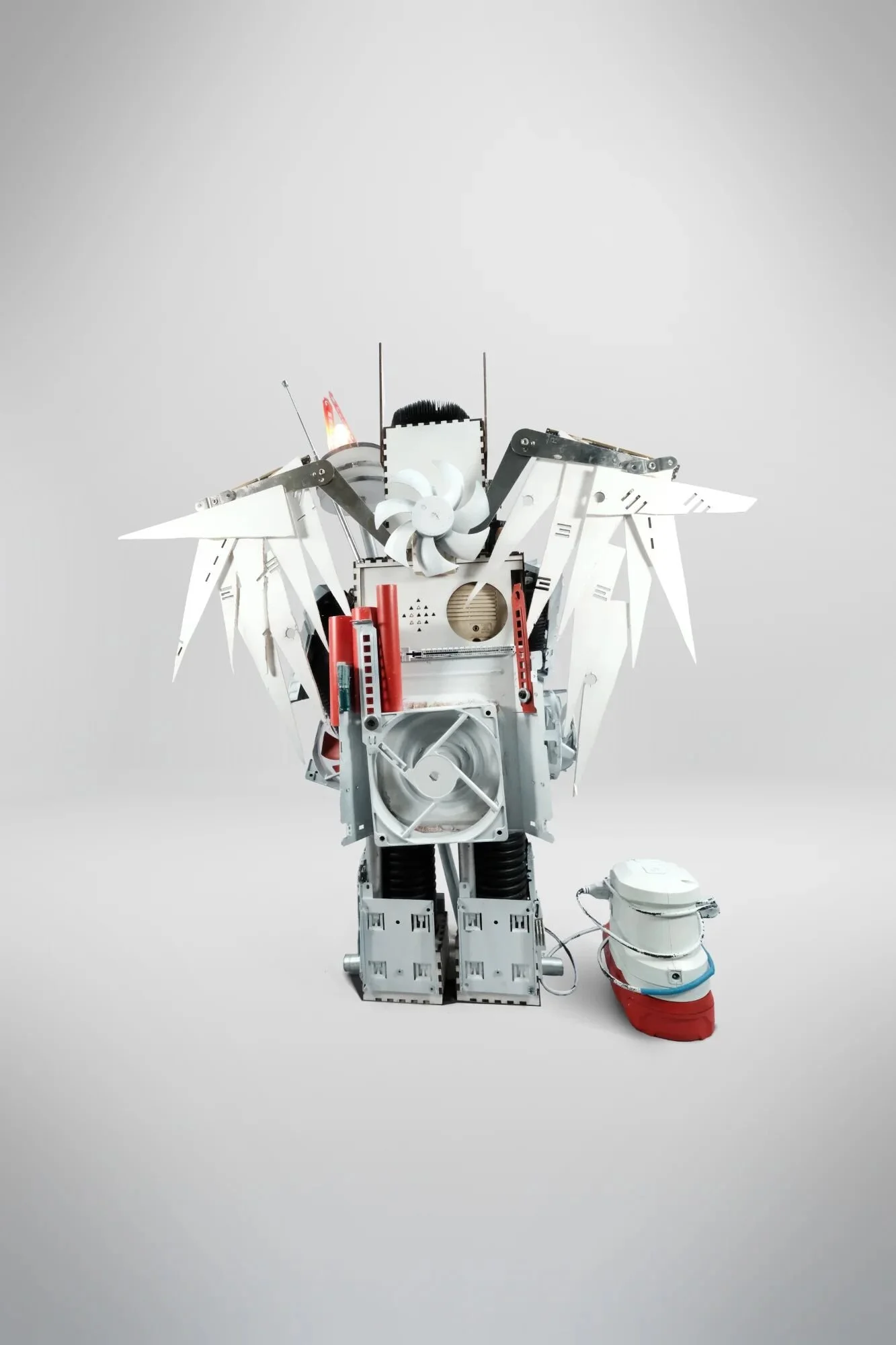
From the back. Steel wings with RAM chips painted white, the memory of flying.
Materials: 1970s Zenith AM radio, old multimeter, mystery gauge (reads km/h, nobody knows what for), stainless steel cabinet hinges, RAM chips, laser cut wooden feathers, CPU heatsinks, PCBs, steel staff, LED torch, industrial e-waste
Size: 72 cm high × 65 cm long × 20 cm wide
How it's put together: Laser cut wooden boxes holding parts from different decades that were never meant to go together. The multimeter is the head, the working Zenith radio is the chest (530 to 1700 kHz, picks up ABC Melbourne on 774 clearly) and the mystery gauge is the lower body. An aluminium frame joins it all up.
Body: Four CPU heatsinks for a ribcage, PCBs from different years for the skeleton, wires on show. The wings are stainless steel cabinet hinges with RAM chips painted white and laser cut wooden feathers. A steel staff with a working LED torch.
Power: An 18V Ryobi battery runs the body and the light. The radio has its own 9V battery and sits away from the Ryobi so it gets a clean signal. You still get some static and bits of other languages, and I like that. You tune the dial yourself.
The gauge: George pulled it out of industrial waste. Neither of us ever looked up what it was for.
The tricky bit: All that metal messed with the radio. Separate batteries, keeping the radio away from the big battery and careful grounding sorted it out.
Status: Everything works. The radio picks up signals, the torch lights up, and the gauge is still a mystery.
Context in Series
#9 of 12, where it starts to turn. Luisón was the lowest point, seeing everything and not being able to act. This one is about living in between two worlds and keeping going anyway.
The radio listens and can't answer, which is how I arrived. The gauge measures something nobody understands. The Western way didn't wipe out the Guaraní way. I've got both now, and neither one wins.
I didn't solve it, I just kept going. Next is The Abyss Illuminator, about choosing which way to point it, every day.